

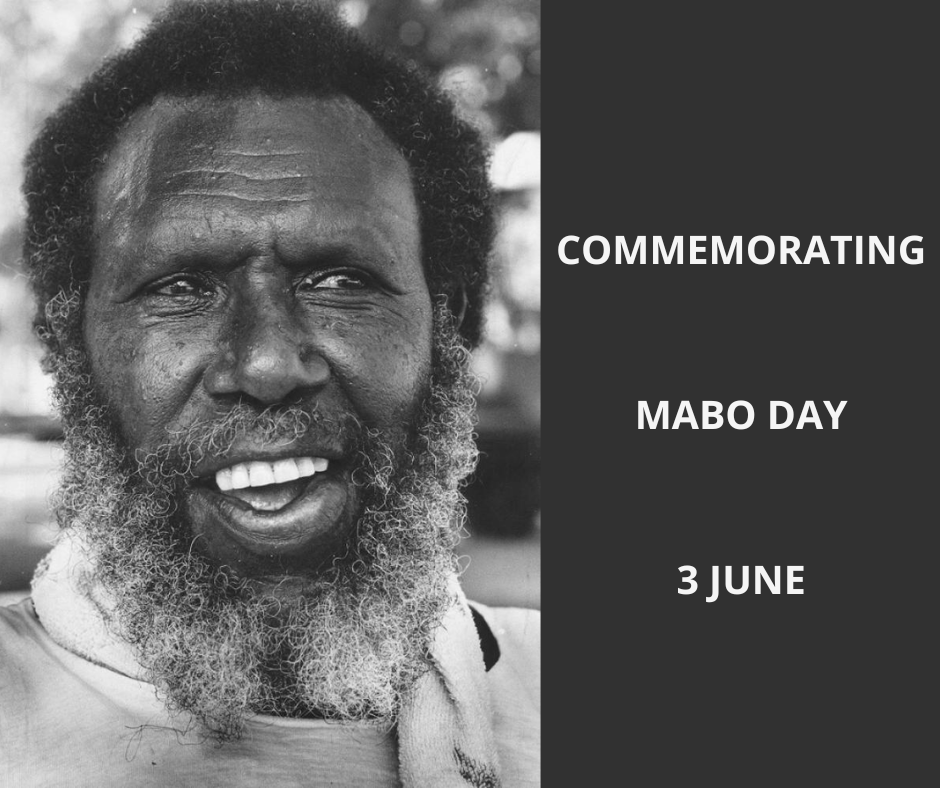
Every year on 3 June, Australians pause to recognise Mabo Day. A moment not just in history, but a powerful reminder of truth, justice, and resilience. It honours Eddie Koiki Mabo, a man from Mer (Murray Island) in the Torres Strait, whose determination changed the legal and moral landscape of this nation forever.
The Case That Challenged a Nation’s Foundation
The Mabo case, officially Mabo and Others v Queensland (No 2) (1992) was far more than a legal battle. It was a bold challenge to a deeply entrenched idea: terra nullius, the claim that Australia was “land belonging to no one” before British colonisation.
For generations, this concept had been used to justify the taking of land from Aboriginal and Torres Strait Islander peoples even though they had lived, governed, and cared for this land for tens of thousands of years.
Eddie Mabo and the Mer Island community knew this was wrong.
They knew that:
- Their people had longstanding laws, customs, and systems of ownership
- Their connection to Country was spiritual, cultural, and enduring
- Their history could not simply be erased by a legal fiction
So they took a stand.
A Journey of Courage and Persistence
The fight was not quick or easy. The case ran for ten years, demanding patience, courage, and unshakable belief. Eddie Mabo, alongside other Mer Islanders, stood firm against a system that had long denied their voices.
Their goal was simple: to have their land rights recognised.
This challenge wasn’t just about Mer Island, it was about rewriting a narrative imposed on all Aboriginal and Torres Strait Islander peoples.
A Historic Decision
On 3 June 1992, the High Court of Australia made its landmark decision:
Terra nullius should never have been applied to Australia.
For the first time in Australian law, it was recognised that:
- Aboriginal and Torres Strait Islander peoples had rights to their land before colonisation
- These rights, known as Native Title, had not simply disappeared
This decision didn’t undo the past, but it changed the future.
It led directly to the Native Title Act 1993, giving legal recognition to Indigenous land rights and creating pathways for claims to be made.
A Legacy That Lives On
Sadly, Eddie Mabo never saw the outcome of the case he fought so hard for. He passed away in January 1992, just five months before the historic ruling.
But his legacy endures.
Today, Mabo Day is not just about remembering a legal victory, it’s about:
- Honouring the strength and resilience of Aboriginal and Torres Strait Islander peoples
- Recognising the deep and continuing connection to Country
- Acknowledging the truth of Australia’s history
- Inspiring future generations to stand for justice and equality
Why Mabo Day Still Matters
Mabo Day is a reminder that change begins when people refuse to accept injustice.
It teaches us that:
- One voice, supported by community, can help reshape a nation
- Truth can challenge long-held assumptions
- Recognition is a critical step toward reconciliation
Eddie Koiki Mabo’s story is one of courage, conviction, and hope. It invites all Australians to reflect on the past and move forward with respect, understanding, and unity.